
Digital role play has become a standard topic in L&D conversations. Still, when you ask what it is exactly, how it works and what the L&D department should do to make it pay off, the answers vary a lot. This article strips the concept down to its essentials.
A definition
A digital role play is an online tool, normally embedded in a learning or coaching strategy, in which trainees play their own role in a conversation with someone else on a topic that is difficult or critical: a leader giving tough feedback, a salesperson handling an objection, a consultant explaining a decision a customer will not like. The common element is a verbal negotiation, in the broad sense: two people who need to get somewhere together and do not start from the same place.
This is different from business games, where the trainee analyzes a scenario and makes decisions on risk, resources or results. Those tools train decision-making. Digital role plays train conversations.
Learning by doing, with a safety net
Role play is one of the oldest forms of learning by doing, the principle John Dewey put at the center of education: learning should be relevant and practical, not only passive and theoretical. Most organizations already know that the more experience a person has with a situation, the better they handle it. The problem is that letting people gain that experience on real customers and real team members is expensive, slow and sometimes harmful.
A digital role play keeps the experiential core of the method and removes the cost. The trainee practices the real situation, with an expert's model available as guidance, and the only consequence of a mistake is a lesson.
What the word digital adds
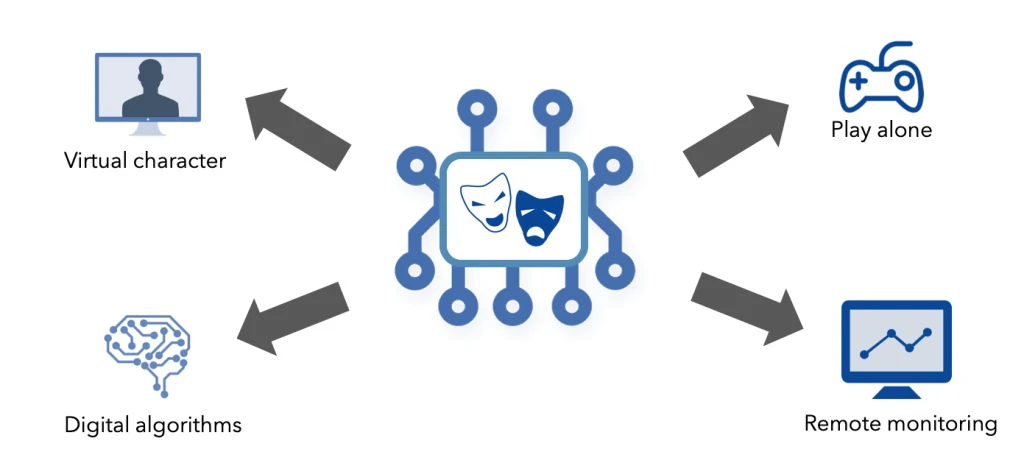
Four things change when a role play goes digital.
First, the counterpart is an AI character on a screen rather than a colleague or a trainer playing a part. Second, the trainee practices alone: nobody has to attend, which removes the stress of being watched and makes multiple sessions sustainable for the organization. Third, the character's reactions are driven by what the trainee says, so the situation keeps a realistic dose of unpredictability. Fourth, since everything happens in software, the conversation can be reviewed afterwards, sentence by sentence, with the analysis the trainee needs to understand what happened.
That last point matters for L&D too, with a precision: the detailed analysis belongs to the learner. The organization sees how the program is progressing, not transcripts of individual conversations.
Five advantages over face-to-face role plays
Compared with a classic role play, the digital version brings five things the classroom cannot.
- Consistency. Behavioral change needs repetition over time. A digital role play makes that economically and logistically sustainable.
- Scalability. Everyone deserves the chance to practice, not only the people who fit in the room.
- A shared yardstick. The same behavioral criteria apply to every conversation in the community, so L&D can see where the program is working and where to intervene.
- Self-awareness through review. Trainees can revisit their conversation and compare how they thought it went with how it actually went.
- A safe space. Without an audience, people stop performing for the room and start expressing themselves the way they really would.
The seven components of a digital role play
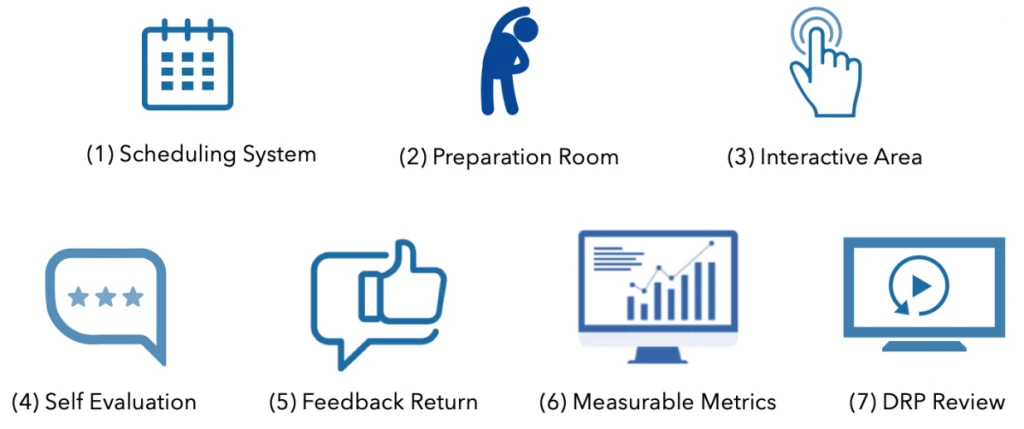
A well-designed platform delivers these benefits through seven components, each with a specific job.
-
Scheduling. Practice gets a slot in the calendar, with reminders, like a real meeting. People stick to their calendars, and a scheduled conversation is far more likely to happen than an open invitation to practice "when you have time".
-
A preparation room. Before the conversation, the trainee learns who the character is, what the situation is, what the conversation is for and which behaviors matter in it. The information is organized the way an expert would read the situation, so the trainee enters already looking at the right things.
-
The conversation. The trainee talks with the character freely, by voice or by text, in a session that typically lasts ten to fifteen minutes. The character has a personality, situational needs and a standpoint, and holds them. A live coach is available with hints calibrated on the trainee's level.
-
Self-evaluation. Before any feedback, the trainee rates their own performance. It is a pause that rarely happens in real life, and it is the raw material of the self-awareness measure.
-
Feedback from the character. The character tells the trainee how they lived the conversation, with specific examples: "I opened up when you asked for my view; I shut down when you said the decision was already made." It is the one piece of information nobody gets in real life, and it links causes to effects more powerfully than any score. The system knows how the character felt because the scenario decided it: it never analyzes the trainee's emotions.
-
Metrics. From the overall outcome of the conversation down to the flow of the communication process, the coherence of the strategy and the behaviors used along the way, measured against the organization's own competency model.
-
Review. The trainee goes back through the conversation from a third-person position, sees which behavior each sentence expressed and how the character reacted at that moment, and talks the session through with an AI coach.
Learning triggers along the whole experience
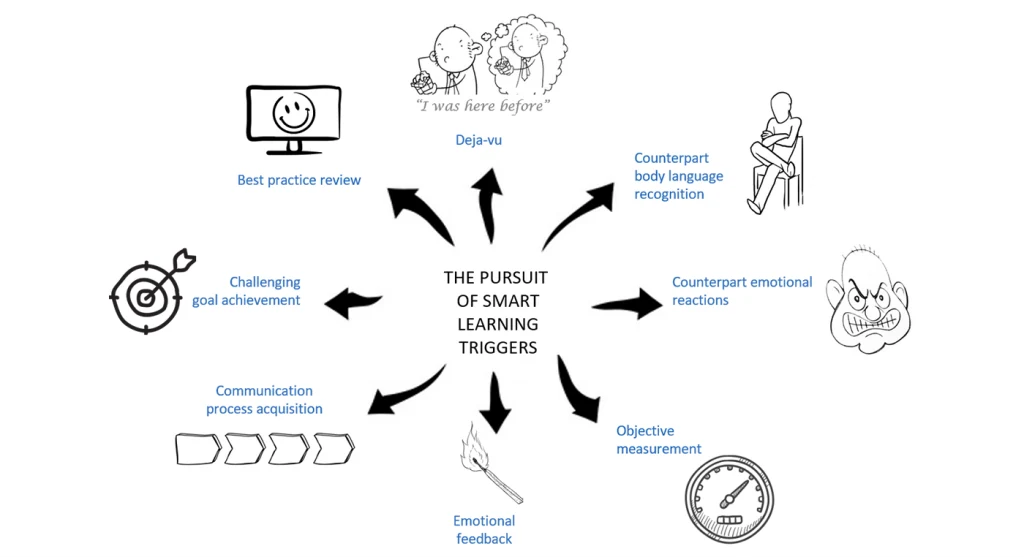
A digital role play does not teach only at the end. It triggers learning throughout: the character's reactions, the measurable outcome, the acquisition of a communication process, the real-time cause and effect of what the trainee says, the challenge of reaching objectives, the sense of familiarity that comes from having been in a similar situation before, and the chance to review the performance critically. Together, these triggers engage both the rational and the emotional side of learning.
Branching is over
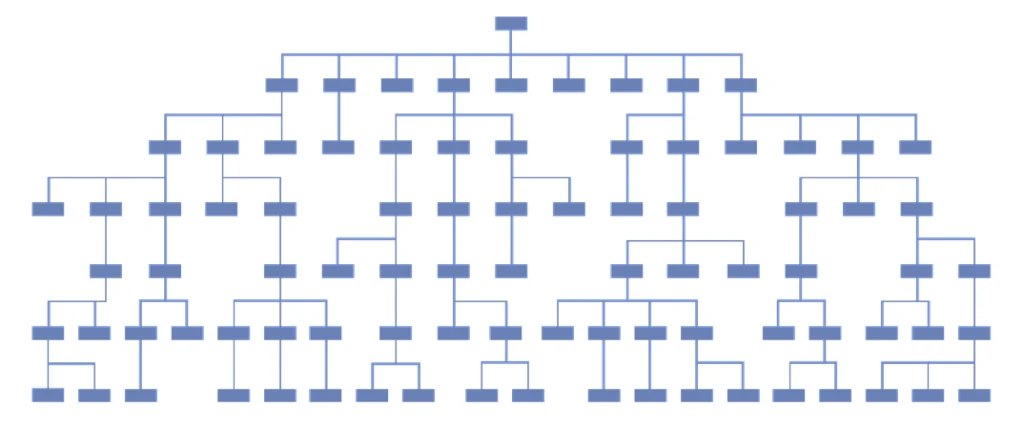
Many digital role plays still work by branching: the trainee picks one of a few options and the character answers with a predetermined reaction. It is cheap, and trainees see through it in minutes. Real conversations are not like that.
Today the trainee speaks in their own words and the character reacts to the strategy expressed in what was said, not to a lexical match. Governed well, generative AI makes the character fluent and consistent at the same time, and that is where the realism, and the learning, come from.
Where to go from here
The most common mistake is placing a digital role play at the end of a classroom course as a quick follow-up. It adds little there. Its value appears when it becomes a training circuit: a sequence of conversations, with a rhythm and a progression of difficulty, inside the L&D strategy. If you want to see what that looks like, book a demo and have a conversation with one of our characters.